National Fruit of India: Mango – King of Fruits, Indian Mango Varieties, Benefits & Global Market
The mango, widely known as the king of fruits, proudly holds the title of the This tropical fruit, scientifically called Mangifera indica, is deeply rooted in Indian culture, agriculture, and economy. From its rich taste to its nutritional value, the mango fruit in India represents both tradition and commercial importance.
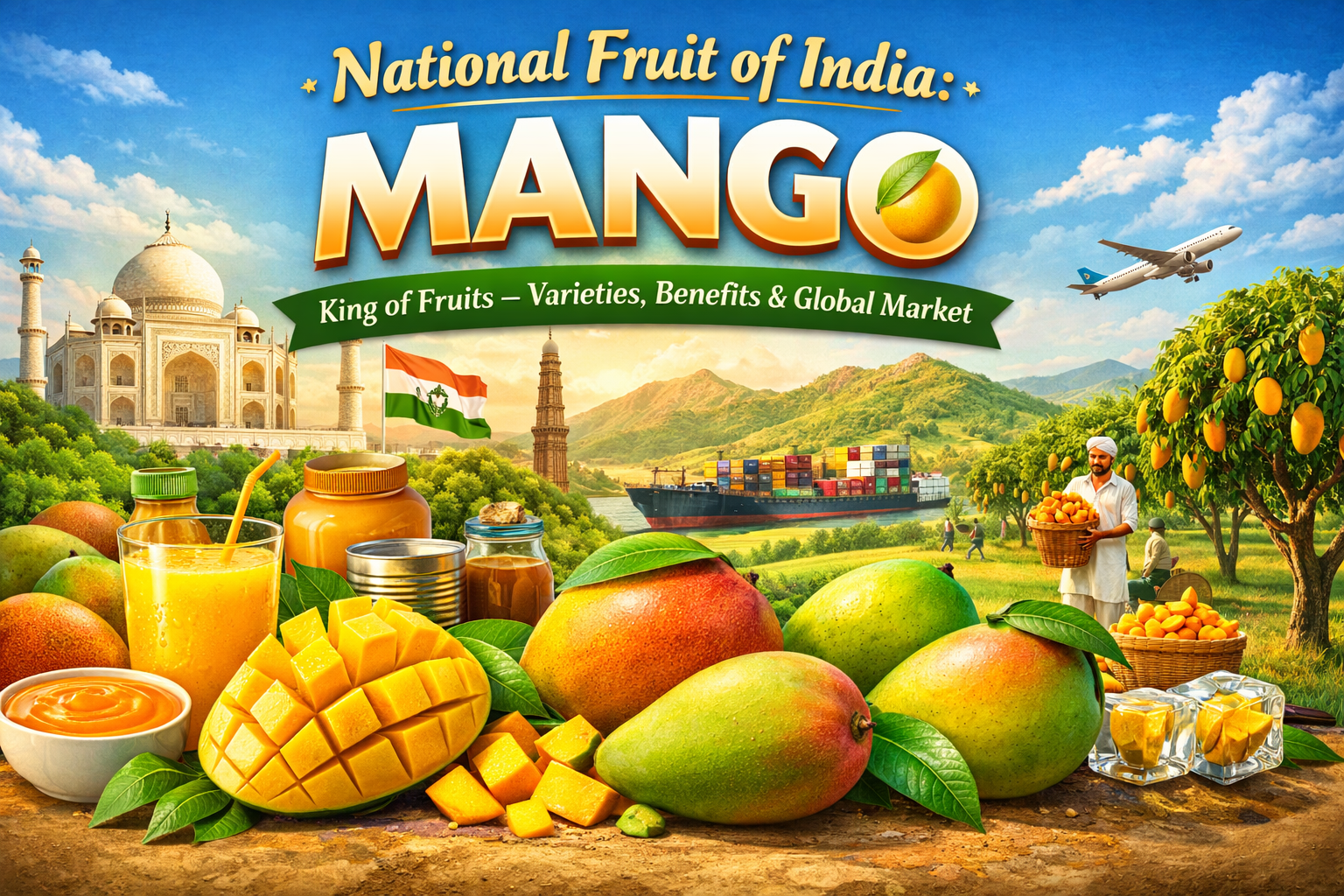
India is one of the largest producers of mangoes in the world, making mango production in India a vital part of the agricultural sector. Along with fresh consumption, mangoes are also processed into a wide range of products, contributing significantly to the mango export industry in India.
???? What is the National Fruit of India? Why Mango is Called the King of Fruits
If you are wondering what the national fruit of India is, the answer is mango. It is called the king of fruits, the mango, because of its unmatched taste, aroma, and versatility. Mangoes symbolize prosperity, love, and abundance in Indian traditions and are widely used in festivals and rituals.
The popularity of Indian mango goes beyond taste—it also offers excellent mango benefits and mango fruit nutrition, including vitamins A, C, and antioxidants. This makes mango not only delicious but also highly nutritious.
???? Indian Mango Varieties: Alphonso, Kesar, Totapuri & Neelam – Best Mango Varieties in India
India is home to a diverse range of Indian mango varieties, each offering unique flavors, textures, and uses. Some of the best mango varieties in India include:
- Alphonso mango – Known for its rich sweetness and premium quality
- Kesar mango – Popular for its bright color and aromatic flavor
- Totapuri mango – Ideal for processing due to its tangy taste
- Neelam mango – Available later in the season with a distinct flavor
These varieties play a key role in both domestic consumption and mango export from India, making them highly valuable in global markets.
???? Mango Production, Export & Processed Mango Products Industry in India
The mango processing industry in India has grown rapidly due to increasing global demand. Today, many food processing companies in India are engaged in producing high-quality mango-based ingredients such as:
- Mango pulp
- Mango puree
- Mango concentrate
- Mango puree concentrate
- Juice concentrate
- Aseptic mango pulp
- IQF mango
- Canned mango
These processed mango products are widely used in beverages, desserts, sauces, and dairy products. Leading mango exporters in India supply these products worldwide, strengthening India’s position in the global food market.
????️ Mango Season in India: Harvesting Timeline & Ideal Growing Conditions
The mango season in India typically begins in the southern regions during April and gradually moves to the northern parts by July and August. The ideal climate for mango cultivation includes a temperature range of 24°C to 27°C, which supports optimal growth and fruit development.
Mangoes are commonly grown using grafting techniques, ensuring consistent quality and maintaining the characteristics of the parent plant. This method is essential for producing export-quality mangoes.
✅ Conclusion: Why Mango Continues to Reign as the National Fruit of India
The mango fruit in India is more than just a seasonal delight—it is a symbol of cultural heritage, economic strength, and agricultural excellence. As the national fruit of India, the mango continues to dominate both domestic and international markets.
From fresh consumption to value-added processed mango products, the fruit supports farmers, boosts exports, and satisfies global demand. With its rich taste, wide variety, and nutritional benefits, the king of fruits, the mango, truly deserves its royal status.
❓ Frequently Asked Questions (FAQs)
1️⃣ What is the national fruit of India?
The national fruit of India is the mango. It is known as the king of fruits due to its rich taste, wide popularity, and cultural importance. Mango has been grown in India for thousands of years and is deeply connected to Indian traditions, festivals, and agriculture.
2️⃣ Why is mango called the king of fruits?
Mango is called the king of fruits because of its exceptional sweetness, variety, and nutritional value. It is loved across all age groups and is available in many flavors, textures, and forms. Its dominance in both taste and production makes it truly “royal” among fruits.
3️⃣ Which are the best mango varieties in India?
Some of the best mango varieties in India include Alphonso, Kesar, Totapuri, and Neelam. Alphonso is famous for its rich flavor, Kesar for its aroma, Totapuri for processing, and Neelam for its late-season availability.
4️⃣ What are the health benefits of mango?
Mango offers multiple health benefits as it is rich in vitamins A and C, antioxidants, and dietary fiber. It helps improve digestion, boosts immunity, supports eye health, and provides natural energy, making it a nutritious fruit choice.
5️⃣ What are processed mango products?
Processed mango products include mango pulp, mango puree, mango concentrate, juice concentrate, canned mango, and IQF mango. These products are widely used in beverages, desserts, dairy, and food manufacturing industries.
6️⃣ What is the mango season in India?
The mango season in India usually starts from April in southern regions and continues till July or August in northern parts. The timing may vary slightly depending on climate and region, but summer is the peak season for fresh mango availability.